
For educational purposes only. This page does not provide medical or veterinary advice, diagnosis, or treatment. Always consult a qualified healthcare or veterinary professional before making any health-related decisions.
Babesia
Babesia microti / B. canis / B. gibsoni
Size: Microscopic — intraerythrocytic forms 1–5 µm
Emerging tick-borne disease; most common in northeastern and upper midwestern United States
Babesia are microscopic protozoan parasites that invade and destroy red blood cells, causing a malaria-like illness called babesiosis. Transmitted by the same black-legged tick (Ixodes scapularis) that spreads Lyme disease, co-infection is common. Dogs are affected by different Babesia species than humans but can suffer severe hemolytic anemia. Babesiosis can be life-threatening in elderly, immunocompromised, or asplenic individuals.
Lifecycle
Infected ticks inject sporozoites into the host's bloodstream during feeding. Sporozoites invade red blood cells and multiply asexually, rupturing cells and releasing merozoites that infect new cells. The tick acquires the parasite by feeding on an infected host and transmits it to the next host during subsequent feeding.
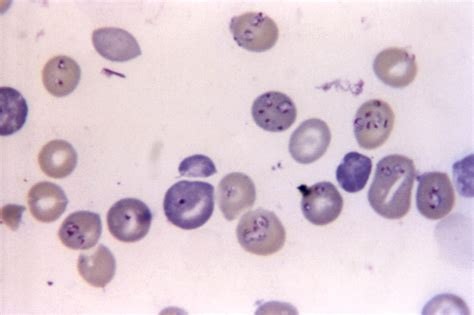
Babesia — Babesia microti / B. canis / B. gibsoni
Symptoms
Pharmaceutical treatments
Evidence-based medications used by healthcare and veterinary professionals.
Reference only. Medication names, types, and notes are provided for general awareness. Dosage, suitability, and prescribing decisions must be made by a licensed physician or veterinarian.
Atovaquone + Azithromycin
PrescriptionPreferred first-line combination for mild to moderate human babesiosis. 7–10 day course.
Clindamycin + Quinine
PrescriptionAlternative regimen for severe cases or treatment failure. Associated with more side effects.
Imidocarb dipropionate
VeterinaryPrimary treatment for canine babesiosis. Given by injection under veterinary supervision.
Diminazene aceturate
VeterinaryUsed in some countries for canine babesiosis. Requires careful dosing to avoid toxicity.
Holistic & natural approaches
Traditional, herbal, and integrative approaches for general awareness.
Not a substitute for medical treatment. Natural remedies listed here have not been evaluated by the FDA or equivalent regulatory bodies. Do not use these in place of prescribed treatment. Always consult a qualified healthcare or veterinary professional first.
Artemisia (Sweet wormwood)
Artemisinin from Artemisia annua has demonstrated activity against Babesia in laboratory studies. Used as a complementary approach by some integrative practitioners — not a replacement for antiparasitic drugs.
Cryptolepis sanguinolenta
West African herb with demonstrated antimicrobial and antiprotozoal properties. Some herbalists use it alongside conventional treatment for tick-borne illness.
Supportive nutrition
Iron-rich foods and B12 support red blood cell recovery after hemolytic anemia. Consult a healthcare provider before supplementing during active infection.
Prevention
Zoonotic risk — low or none
Human and canine Babesia species are distinct and are not directly transmitted between dogs and people. Both are tick-borne — the shared risk is tick exposure, not direct animal-to-human transmission.
Related parasites

Roundworm
Ascaris lumbricoides / Toxocara spp.
Roundworms are large intestinal nematodes and among the most prevalent parasites on Earth. Adult worms live in the small intestine and can reach 15–35 cm in length. Eggs are shed in feces and can survive in soil for years. In pets, Toxocara species are the most common intestinal parasites and can occasionally infect humans (visceral larva migrans).
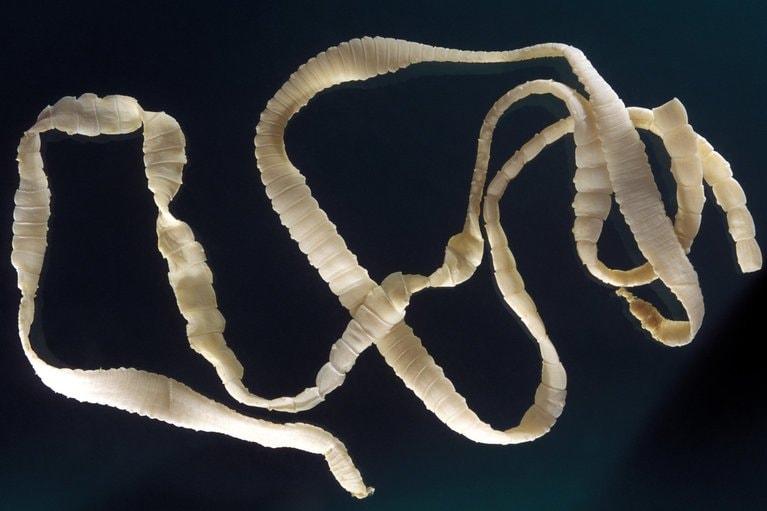
Tapeworm
Taenia spp. / Dipylidium caninum / Echinococcus spp.
Tapeworms are flat, ribbon-like segmented worms that attach to the intestinal wall using suckers and hooks. They have no digestive system and absorb nutrients directly through their skin. Adult worms shed egg-filled segments (proglottids) that look like grains of rice. Some species (Echinococcus) can form dangerous cysts in organs.

Giardia
Giardia duodenalis (syn. G. lamblia, G. intestinalis)
Giardia is a microscopic flagellated protozoan that colonizes the small intestine. It exists in two forms: the active trophozoite (pear-shaped, with two nuclei resembling a face) and the hardy cyst form that can survive in cold water for months. It is a leading cause of waterborne diarrheal illness worldwide.