
For educational purposes only. This page does not provide medical or veterinary advice, diagnosis, or treatment. Always consult a qualified healthcare or veterinary professional before making any health-related decisions.
Bedbug
Cimex lectularius / Cimex hemipterus
Size: Visible to naked eye — adults 4–5 mm; nymphs 1–4 mm
Globally resurgent — infestations reported in all 50 US states and over 80 countries
Bedbugs are small, flat, wingless insects that feed exclusively on blood, primarily at night. They do not transmit disease but cause significant skin reactions, sleep disruption, and psychological distress. Infestations spread rapidly through luggage, clothing, and used furniture. Modern populations show widespread resistance to many pesticides, making eradication challenging.
Lifecycle
Females lay 1–5 eggs per day in cracks and crevices near sleeping areas. Eggs hatch in 6–10 days into nymphs, which must feed before each of five molts. The full cycle from egg to reproductive adult takes 5–8 weeks under warm conditions. Adults can survive 6–12 months without feeding.

Bedbug — Cimex lectularius / Cimex hemipterus
Symptoms
Pharmaceutical treatments
Evidence-based medications used by healthcare and veterinary professionals.
Reference only. Medication names, types, and notes are provided for general awareness. Dosage, suitability, and prescribing decisions must be made by a licensed physician or veterinarian.
Topical corticosteroids (hydrocortisone 1%)
OTCApply to bite sites 2–3 times daily to reduce inflammation and itching. Available without prescription. Stronger formulations (triamcinolone, betamethasone) by prescription for severe reactions.
Oral antihistamines (diphenhydramine, cetirizine, loratadine)
OTCReduce itching and allergic response. Diphenhydramine (Benadryl) 25–50 mg at bedtime also aids sleep. Non-sedating options (cetirizine, loratadine) for daytime use.
Oral corticosteroids (prednisone)
PrescriptionShort course (5–7 days) for severe widespread reactions or significant allergic response. Not for routine bite treatment.
Topical antibiotics (mupirocin, bacitracin)
OTC/PrescriptionApply to bite sites showing signs of secondary bacterial infection (increased redness, warmth, pus). Oral antibiotics required if infection spreads.
Epinephrine (EpiPen)
PrescriptionFor rare cases of anaphylaxis. Seek emergency care immediately if signs of severe allergic reaction occur (throat swelling, difficulty breathing, rapid pulse).
Holistic & natural approaches
Traditional, herbal, and integrative approaches for general awareness.
Not a substitute for medical treatment. Natural remedies listed here have not been evaluated by the FDA or equivalent regulatory bodies. Do not use these in place of prescribed treatment. Always consult a qualified healthcare or veterinary professional first.
Cold compress
Apply a cold, damp cloth or ice pack wrapped in a towel to bite sites for 10–15 minutes. Reduces swelling and numbs itching. No evidence of systemic effect but effective symptomatic relief.
Calamine lotion
Traditional topical for insect bites. Zinc oxide and ferric oxide provide mild anti-itch and drying effect. Apply directly to bites as needed. Well-tolerated with minimal side effects.
Colloidal oatmeal bath or cream
Clinically supported for itch relief. Avenanthramides in oats have anti-inflammatory properties. Soak in lukewarm oatmeal bath for 15–20 minutes or apply oatmeal-based cream to affected areas.
Tea tree oil (diluted)
Some evidence of antibacterial and anti-itch properties. Dilute 1–2 drops in a teaspoon of carrier oil before applying to skin. Never apply undiluted — can cause contact dermatitis. Limited evidence for bedbug repellency.
Diatomaceous earth (food grade) — environmental use
Mechanical insecticide: microscopic silica particles damage the bedbug's exoskeleton, causing dehydration. Apply a thin layer in cracks, along baseboards, and under furniture. Takes 1–2 weeks to show effect. Not a standalone eradication method but useful as part of an integrated approach.
Prevention
Zoonotic risk — low or none
Bedbugs feed primarily on humans but will bite other warm-blooded animals (dogs, cats, birds) if humans are unavailable. They do not transmit bloodborne diseases between hosts and are not considered a zoonotic risk.
Related parasites

Roundworm
Ascaris lumbricoides / Toxocara spp.
Roundworms are large intestinal nematodes and among the most prevalent parasites on Earth. Adult worms live in the small intestine and can reach 15–35 cm in length. Eggs are shed in feces and can survive in soil for years. In pets, Toxocara species are the most common intestinal parasites and can occasionally infect humans (visceral larva migrans).
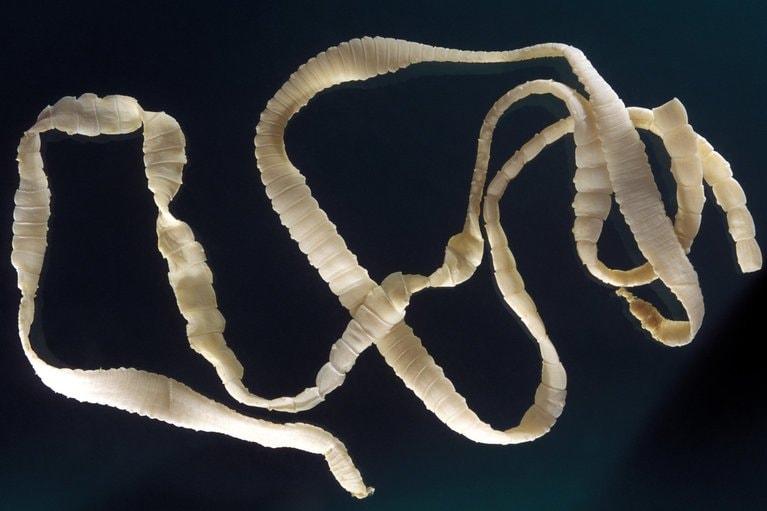
Tapeworm
Taenia spp. / Dipylidium caninum / Echinococcus spp.
Tapeworms are flat, ribbon-like segmented worms that attach to the intestinal wall using suckers and hooks. They have no digestive system and absorb nutrients directly through their skin. Adult worms shed egg-filled segments (proglottids) that look like grains of rice. Some species (Echinococcus) can form dangerous cysts in organs.

Giardia
Giardia duodenalis (syn. G. lamblia, G. intestinalis)
Giardia is a microscopic flagellated protozoan that colonizes the small intestine. It exists in two forms: the active trophozoite (pear-shaped, with two nuclei resembling a face) and the hardy cyst form that can survive in cold water for months. It is a leading cause of waterborne diarrheal illness worldwide.