
For educational purposes only. This page does not provide medical or veterinary advice, diagnosis, or treatment. Always consult a qualified healthcare or veterinary professional before making any health-related decisions.
Ear Mite
Otodectes cynotis
Size: Microscopic — adults approx 0.3–0.5 mm; not visible to naked eye
Most common cause of ear disease in cats; affects up to 50% of cats with ear problems
Ear mites are tiny arachnids that live in the ear canals of cats and dogs, feeding on skin debris, ear wax, and tissue fluids. They are highly contagious between animals and are a leading cause of otitis externa (ear canal inflammation). While they rarely infect humans, they can cause temporary itching if they come into contact with human skin.
Lifecycle
The complete lifecycle takes 3 weeks. Eggs hatch in 4 days. Larvae, protonymphs, and deutonymphs each feed and molt over 2 weeks. Adults mate and females lay eggs in the ear canal. Mites can survive briefly off the host.
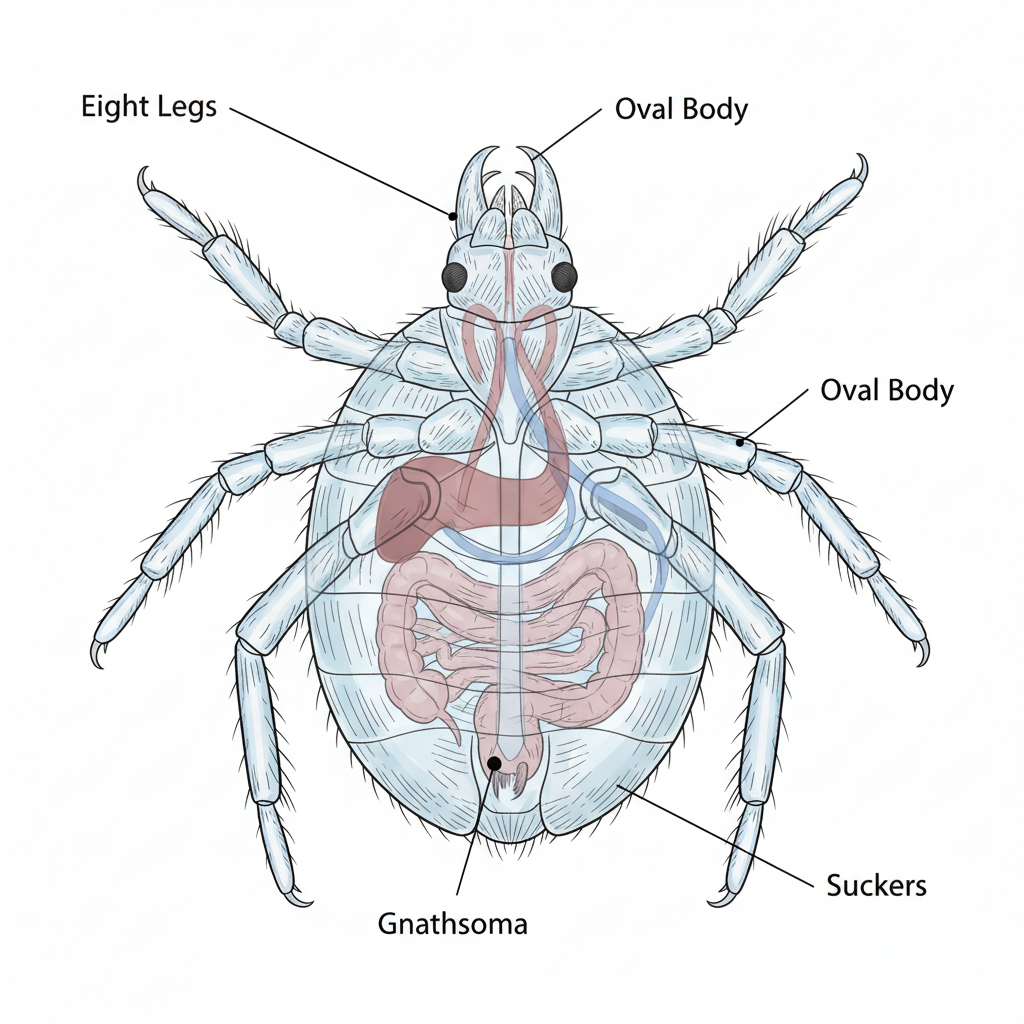
Ear Mite — Otodectes cynotis
Symptoms
Pharmaceutical treatments
Evidence-based medications used by healthcare and veterinary professionals.
Reference only. Medication names, types, and notes are provided for general awareness. Dosage, suitability, and prescribing decisions must be made by a licensed physician or veterinarian.
Selamectin (Revolution)
PrescriptionSingle topical application. Highly effective and also covers fleas and heartworm. Preferred for convenience.
Ivermectin ear drops
Prescription/VeterinaryApplied directly into the ear canal. Effective but requires thorough ear cleaning first.
Milbemycin oxime (Milbemite)
PrescriptionSingle-dose ear drops for cats. Highly effective.
Thiabendazole ear drops
VeterinaryOlder treatment, still effective. Often combined with anti-inflammatory and antibacterial agents.
Holistic & natural approaches
Traditional, herbal, and integrative approaches for general awareness.
Not a substitute for medical treatment. Natural remedies listed here have not been evaluated by the FDA or equivalent regulatory bodies. Do not use these in place of prescribed treatment. Always consult a qualified healthcare or veterinary professional first.
Mineral oil
Suffocates ear mites. Apply a few drops into the ear canal, massage gently, and wipe out debris. Repeat daily for 3–4 weeks. Must be continued for the full lifecycle to break the cycle.
Diluted apple cider vinegar
Alters the pH of the ear canal, making it inhospitable to mites. Mix 1:1 with water and apply with a cotton ball to the outer ear. Do not use if the ear is inflamed or the eardrum may be ruptured.
Aloe vera gel
Soothes inflammation and has mild antimicrobial properties. Apply to the outer ear to reduce irritation.
Yellow dock root tea
Used in herbal veterinary medicine as an ear rinse. Dilute and apply to outer ear canal. Anecdotal evidence only.
Prevention
Zoonotic risk — low or none
Ear mites very rarely infect humans. Temporary skin irritation is possible with heavy exposure, but they cannot establish in human ears.
Related parasites

Roundworm
Ascaris lumbricoides / Toxocara spp.
Roundworms are large intestinal nematodes and among the most prevalent parasites on Earth. Adult worms live in the small intestine and can reach 15–35 cm in length. Eggs are shed in feces and can survive in soil for years. In pets, Toxocara species are the most common intestinal parasites and can occasionally infect humans (visceral larva migrans).
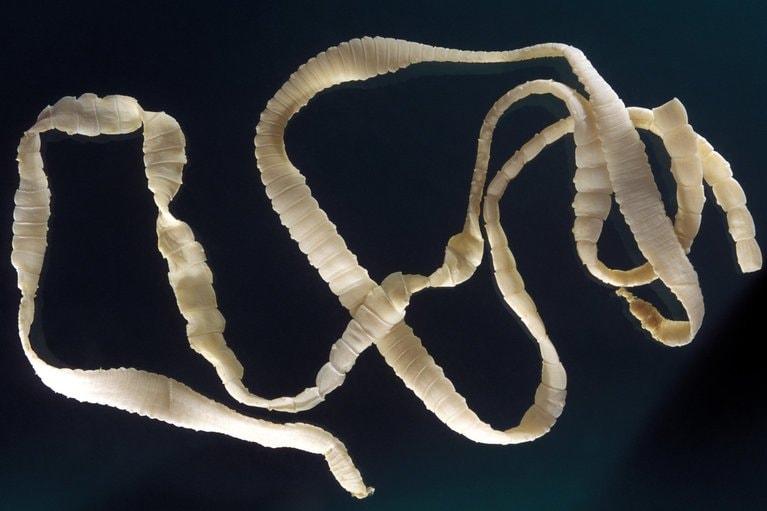
Tapeworm
Taenia spp. / Dipylidium caninum / Echinococcus spp.
Tapeworms are flat, ribbon-like segmented worms that attach to the intestinal wall using suckers and hooks. They have no digestive system and absorb nutrients directly through their skin. Adult worms shed egg-filled segments (proglottids) that look like grains of rice. Some species (Echinococcus) can form dangerous cysts in organs.

Giardia
Giardia duodenalis (syn. G. lamblia, G. intestinalis)
Giardia is a microscopic flagellated protozoan that colonizes the small intestine. It exists in two forms: the active trophozoite (pear-shaped, with two nuclei resembling a face) and the hardy cyst form that can survive in cold water for months. It is a leading cause of waterborne diarrheal illness worldwide.