
For educational purposes only. This page does not provide medical or veterinary advice, diagnosis, or treatment. Always consult a qualified healthcare or veterinary professional before making any health-related decisions.
Leech
Hirudo medicinalis / Haemadipsa spp.
Size: Visible to naked eye — adults 2–20 cm depending on species
Common in tropical and subtropical freshwater environments and moist terrestrial habitats worldwide
Leeches are blood-sucking annelid worms that attach to a host using suckers at both ends of their body. They secrete hirudin, a powerful anticoagulant, to keep blood flowing during feeding. Aquatic leeches are found in freshwater lakes, rivers, and swamps; terrestrial leeches inhabit moist forest floors in tropical regions. While a single leech bite is rarely dangerous, heavy infestations can cause significant blood loss, especially in small animals.
Lifecycle
Leeches are hermaphrodites — each individual has both male and female reproductive organs. After mating, they deposit cocoons in moist soil or under rocks. Juveniles hatch fully formed and begin seeking hosts immediately. Most species feed infrequently — a single blood meal can sustain a leech for months. Aquatic leeches attach to hosts in water; terrestrial species drop from vegetation or crawl onto passing animals.
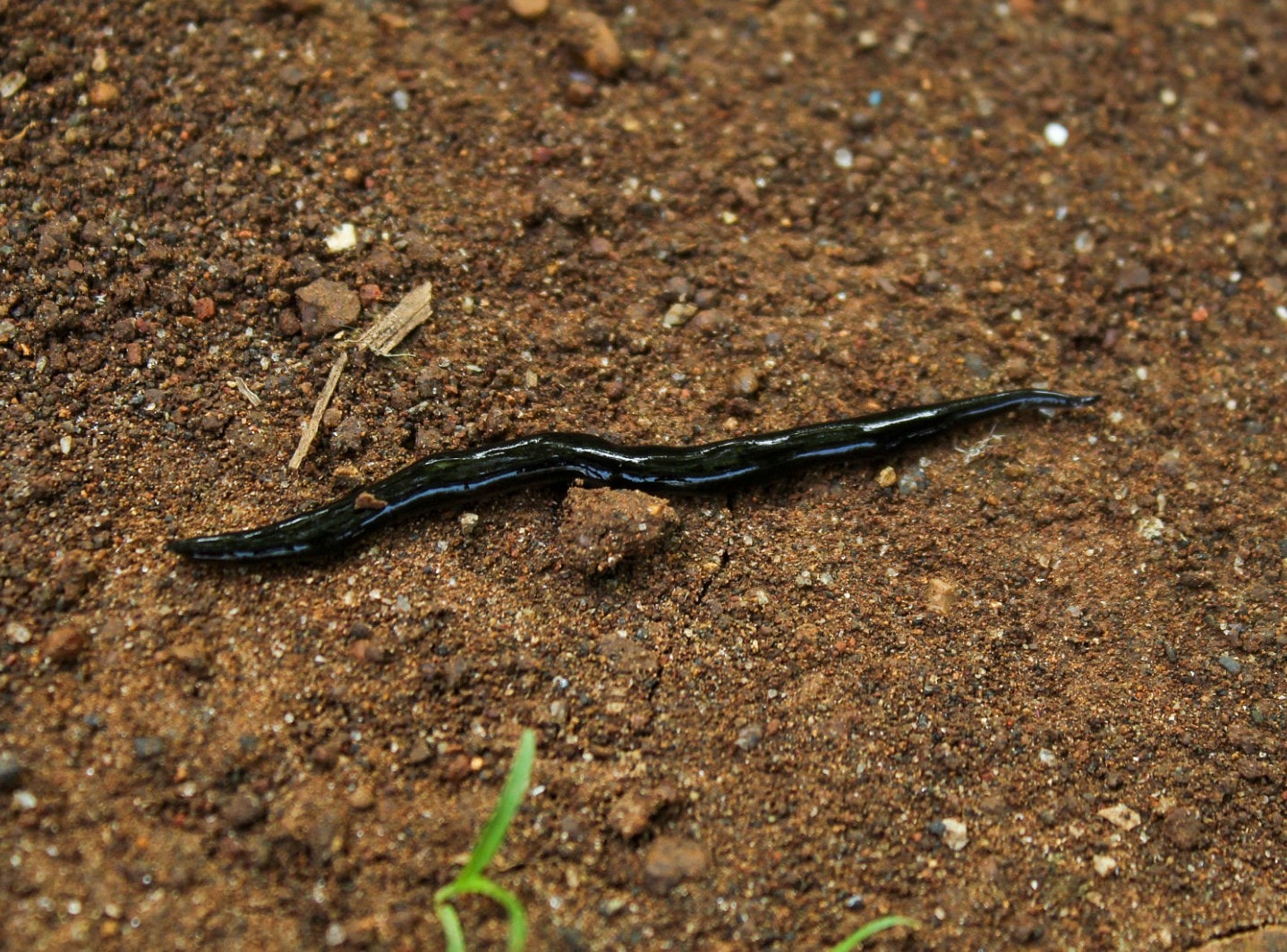
Leech — Hirudo medicinalis / Haemadipsa spp.
Symptoms
Pharmaceutical treatments
Evidence-based medications used by healthcare and veterinary professionals.
Reference only. Medication names, types, and notes are provided for general awareness. Dosage, suitability, and prescribing decisions must be made by a licensed physician or veterinarian.
Antiseptic wound wash (chlorhexidine / povidone-iodine)
OTCClean the bite site thoroughly after leech removal to prevent secondary infection. Apply antiseptic solution and cover with a sterile dressing.
Topical antibiotic ointment (mupirocin / bacitracin)
OTC / PrescriptionApply to bite wound if signs of infection develop (increasing redness, warmth, discharge). Mupirocin (prescription) for confirmed bacterial infection.
Oral antibiotics (amoxicillin-clavulanate)
PrescriptionPrescribed if secondary infection is confirmed or suspected. Leeches can transmit Aeromonas bacteria — seek medical attention if wound becomes infected.
Iron supplementation
OTC / PrescriptionFor anaemia caused by heavy infestation, especially in small animals. Veterinary guidance required for pets; human iron supplements not suitable for animals.
Holistic & natural approaches
Traditional, herbal, and integrative approaches for general awareness.
Not a substitute for medical treatment. Natural remedies listed here have not been evaluated by the FDA or equivalent regulatory bodies. Do not use these in place of prescribed treatment. Always consult a qualified healthcare or veterinary professional first.
Salt or vinegar application
Applying table salt or white vinegar directly to an attached leech causes it to release and detach. Do not pull forcefully — this can cause the leech to regurgitate into the wound, increasing infection risk.
Heat (lit match or lighter)
Holding a heat source near (not touching) the leech causes it to detach. Use with caution to avoid burning the skin. Salt or vinegar is safer and equally effective.
Tea tree oil (diluted)
Diluted tea tree oil applied around the bite site may deter leeches and has mild antiseptic properties. Do not use undiluted — can irritate skin. Not recommended for use on cats (toxic to felines).
Aloe vera gel
Apply to bite site after leech removal to soothe inflammation and itching. Has mild antimicrobial properties. Safe for humans and dogs; avoid on cats.
Prevention
Zoonotic risk — low or none
Leeches are not zoonotic in the traditional sense — they do not transmit diseases between animals and humans through their bite in most cases. However, they can carry and transmit Aeromonas hydrophila bacteria, which can cause wound infections in both humans and animals. Nasal leeches (Dinobdella ferox) can infest the nasal passages of humans and animals drinking from infested water sources.
Related parasites

Roundworm
Ascaris lumbricoides / Toxocara spp.
Roundworms are large intestinal nematodes and among the most prevalent parasites on Earth. Adult worms live in the small intestine and can reach 15–35 cm in length. Eggs are shed in feces and can survive in soil for years. In pets, Toxocara species are the most common intestinal parasites and can occasionally infect humans (visceral larva migrans).
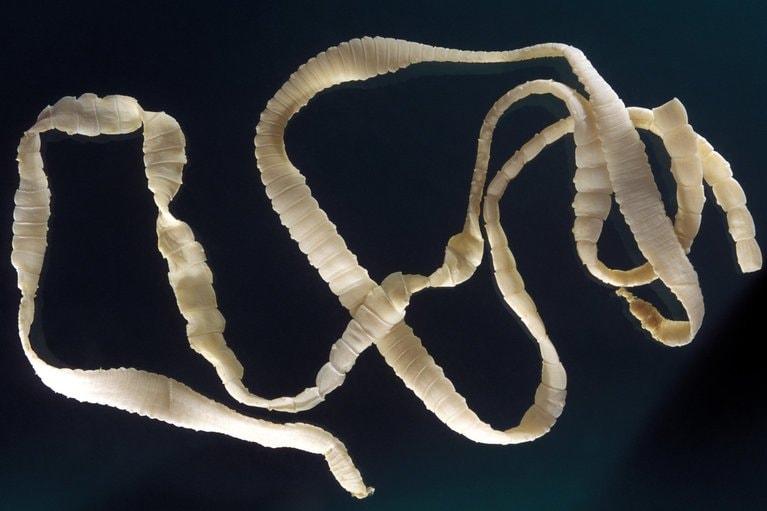
Tapeworm
Taenia spp. / Dipylidium caninum / Echinococcus spp.
Tapeworms are flat, ribbon-like segmented worms that attach to the intestinal wall using suckers and hooks. They have no digestive system and absorb nutrients directly through their skin. Adult worms shed egg-filled segments (proglottids) that look like grains of rice. Some species (Echinococcus) can form dangerous cysts in organs.

Giardia
Giardia duodenalis (syn. G. lamblia, G. intestinalis)
Giardia is a microscopic flagellated protozoan that colonizes the small intestine. It exists in two forms: the active trophozoite (pear-shaped, with two nuclei resembling a face) and the hardy cyst form that can survive in cold water for months. It is a leading cause of waterborne diarrheal illness worldwide.