
For educational purposes only. This page does not provide medical or veterinary advice, diagnosis, or treatment. Always consult a qualified healthcare or veterinary professional before making any health-related decisions.
Liver Fluke
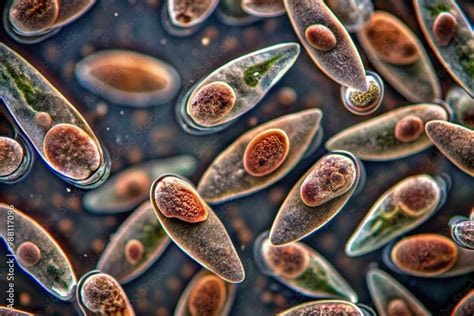
Fasciola hepatica / Fasciola gigantica
Size: Visible to naked eye — adults 2–3 cm (Fasciola hepatica up to 5 cm)
Estimated 2.4–17 million people infected worldwide; 180 million at risk; endemic in over 70 countries
Liver flukes are parasitic flatworms that infect the bile ducts and liver of their hosts. Fasciola hepatica is the most widespread species, found on every continent except Antarctica. Infection occurs by eating aquatic plants (especially watercress) contaminated with encysted larvae (metacercariae). While primarily a disease of livestock (sheep, cattle), it is an increasingly recognized human and pet pathogen. Chronic infection can cause serious liver damage and bile duct obstruction.
Lifecycle
Adult flukes in the bile ducts produce eggs that pass in feces into water. Eggs hatch into miracidia that infect freshwater snails (Lymnaea spp.). Inside the snail, the parasite multiplies and eventually releases cercariae that encyst on aquatic vegetation as metacercariae. Hosts are infected by ingesting contaminated plants or water. Larvae migrate through the intestinal wall, across the peritoneum, and into the liver, causing significant tissue damage before reaching the bile ducts where they mature.
Liver Fluke — Fasciola hepatica / Fasciola gigantica
Symptoms
Pharmaceutical treatments
Evidence-based medications used by healthcare and veterinary professionals.
Reference only. Medication names, types, and notes are provided for general awareness. Dosage, suitability, and prescribing decisions must be made by a licensed physician or veterinarian.
Triclabendazole (Egaten)
PrescriptionDrug of choice for human fascioliasis. Single dose of 10 mg/kg (or two doses of 10 mg/kg 12 hours apart for severe infections). FDA-approved in 2019. Highly effective against both juvenile and adult flukes.
Nitazoxanide
PrescriptionAlternative when triclabendazole is unavailable. 500 mg twice daily for 7 days. Less effective than triclabendazole but may be used in resource-limited settings.
Praziquantel
PrescriptionNot effective against Fasciola hepatica (unlike most other flukes). Do not use as a substitute for triclabendazole for liver fluke infections.
Triclabendazole (veterinary — Fasinex)
Veterinary PrescriptionUsed in dogs and cats under veterinary supervision. Dosing varies by species and severity. Supportive care (fluids, nutritional support) important in severe cases.
Holistic & natural approaches
Traditional, herbal, and integrative approaches for general awareness.
Not a substitute for medical treatment. Natural remedies listed here have not been evaluated by the FDA or equivalent regulatory bodies. Do not use these in place of prescribed treatment. Always consult a qualified healthcare or veterinary professional first.
Milk thistle (Silybum marianum)
Silymarin has hepatoprotective properties and may help support liver recovery during and after fluke infection. Available as capsules or tincture. Used as a supportive supplement alongside conventional treatment — not a replacement.
Dandelion root
Traditional liver tonic with mild choleretic (bile-stimulating) properties. May support bile flow and liver function during recovery. Available as tea or tincture. Supportive use only.
Turmeric (Curcumin)
Anti-inflammatory and hepatoprotective properties. Some laboratory studies suggest activity against trematodes. May help reduce liver inflammation during infection. Take with black pepper (piperine) to improve absorption.
Dietary support
A low-fat diet reduces bile duct stress during active infection. Increase antioxidant-rich foods (berries, leafy greens) to support liver recovery. Avoid alcohol entirely during treatment and recovery.
Prevention
Zoonotic risk — can spread between animals and humans
Fasciola hepatica is a true zoonosis — humans, dogs, cats, and livestock all share the same parasite species. The primary route of human infection is eating contaminated aquatic plants, not direct contact with infected animals. However, infected livestock and pets contribute to environmental contamination through fecal egg shedding.
Related parasites

Roundworm
Ascaris lumbricoides / Toxocara spp.
Roundworms are large intestinal nematodes and among the most prevalent parasites on Earth. Adult worms live in the small intestine and can reach 15–35 cm in length. Eggs are shed in feces and can survive in soil for years. In pets, Toxocara species are the most common intestinal parasites and can occasionally infect humans (visceral larva migrans).
Tapeworm
Taenia spp. / Dipylidium caninum / Echinococcus spp.
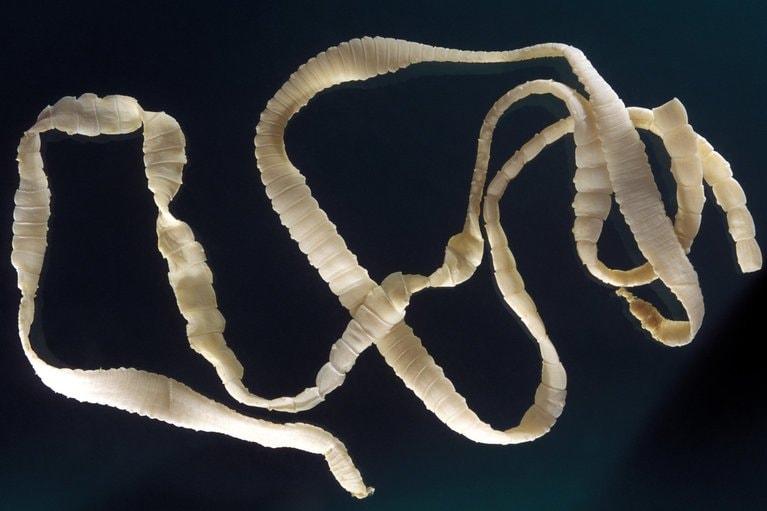
Tapeworms are flat, ribbon-like segmented worms that attach to the intestinal wall using suckers and hooks. They have no digestive system and absorb nutrients directly through their skin. Adult worms shed egg-filled segments (proglottids) that look like grains of rice. Some species (Echinococcus) can form dangerous cysts in organs.

Giardia
Giardia duodenalis (syn. G. lamblia, G. intestinalis)
Giardia is a microscopic flagellated protozoan that colonizes the small intestine. It exists in two forms: the active trophozoite (pear-shaped, with two nuclei resembling a face) and the hardy cyst form that can survive in cold water for months. It is a leading cause of waterborne diarrheal illness worldwide.