
For educational purposes only. This page does not provide medical or veterinary advice, diagnosis, or treatment. Always consult a qualified healthcare or veterinary professional before making any health-related decisions.
Mosquito
Anopheles / Aedes / Culex spp.
Size: Visible to naked eye — adults 3–6 mm
Mosquitoes transmit disease to over 700 million people annually; leading cause of infectious disease death worldwide
Mosquitoes are blood-feeding insects and the world's deadliest animal vectors of disease. Female mosquitoes require a blood meal to produce eggs and in doing so transmit parasites, viruses, and bacteria. Key parasitic diseases they transmit include malaria (Plasmodium spp.), heartworm in dogs and cats (Dirofilaria immitis), and canine and feline filariasis. They also vector viral diseases such as dengue, Zika, West Nile, and yellow fever.
Lifecycle
Eggs are laid on standing water. Larvae and pupae are aquatic, developing in 7–14 days depending on temperature. Adults live 2–4 weeks. Only females bite; they require blood to develop eggs.

Mosquito — Anopheles / Aedes / Culex spp.
Symptoms
Pharmaceutical treatments
Evidence-based medications used by healthcare and veterinary professionals.
Reference only. Medication names, types, and notes are provided for general awareness. Dosage, suitability, and prescribing decisions must be made by a licensed physician or veterinarian.
DEET (N,N-Diethyl-meta-toluamide)
OTCMost effective and widely used repellent. Concentrations of 20–30% provide several hours of protection. Safe for adults and children over 2 months. Apply to exposed skin and clothing.
Picaridin (Icaridin)
OTCEffective alternative to DEET with less odor and feel. 20% concentration provides up to 8–12 hours protection. Safe for children and pregnant women.
Permethrin (clothing treatment)
OTCApplied to clothing, gear, and bed nets — not directly to skin. Kills mosquitoes on contact. Remains effective through multiple washes. Highly effective for outdoor workers and travelers.
Artemisinin-based combination therapy (ACT)
PrescriptionFirst-line treatment for uncomplicated malaria caused by Plasmodium falciparum. Combines artemisinin derivatives with a partner drug (e.g., artemether-lumefantrine). Requires medical diagnosis.
Heartworm preventives (dogs/cats)
PrescriptionMonthly preventives (ivermectin, milbemycin, selamectin) protect pets from heartworm transmitted by mosquitoes. Year-round prevention strongly recommended in endemic areas.
Holistic & natural approaches
Traditional, herbal, and integrative approaches for general awareness.
Not a substitute for medical treatment. Natural remedies listed here have not been evaluated by the FDA or equivalent regulatory bodies. Do not use these in place of prescribed treatment. Always consult a qualified healthcare or veterinary professional first.
Oil of lemon eucalyptus (OLE)
CDC-approved plant-based repellent. Provides protection comparable to low concentrations of DEET. Not recommended for children under 3 years. Apply to exposed skin.
Citronella oil
Widely used natural repellent in candles and topical products. Provides short-duration protection (30–60 minutes). Less effective than DEET but useful as a supplement.
Lavender essential oil
Has mild repellent properties. Dilute in carrier oil before applying to skin. Pleasant scent; may help soothe bite irritation as well.
Neem oil
Azadirachtin in neem oil has insect-repellent and larvicidal properties. Used in some topical formulations. Strong odor; dilute before use.
Eliminate standing water
The single most effective environmental control measure. Empty birdbaths, flowerpot saucers, gutters, and any container holding standing water weekly to eliminate breeding sites.
Prevention
Zoonotic risk — can spread between animals and humans
Mosquitoes are the primary vector for heartworm (Dirofilaria immitis) in dogs and cats. While humans can be infected with Dirofilaria, larvae do not mature and the infection is typically self-limiting. Mosquito-borne viral diseases (West Nile, dengue, Zika) affect humans but not pets in the same way.
Related parasites

Roundworm
Ascaris lumbricoides / Toxocara spp.
Roundworms are large intestinal nematodes and among the most prevalent parasites on Earth. Adult worms live in the small intestine and can reach 15–35 cm in length. Eggs are shed in feces and can survive in soil for years. In pets, Toxocara species are the most common intestinal parasites and can occasionally infect humans (visceral larva migrans).
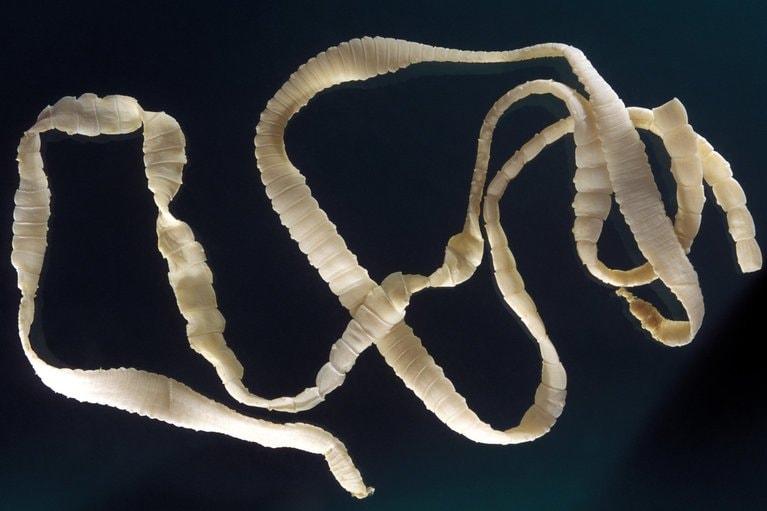
Tapeworm
Taenia spp. / Dipylidium caninum / Echinococcus spp.
Tapeworms are flat, ribbon-like segmented worms that attach to the intestinal wall using suckers and hooks. They have no digestive system and absorb nutrients directly through their skin. Adult worms shed egg-filled segments (proglottids) that look like grains of rice. Some species (Echinococcus) can form dangerous cysts in organs.

Giardia
Giardia duodenalis (syn. G. lamblia, G. intestinalis)
Giardia is a microscopic flagellated protozoan that colonizes the small intestine. It exists in two forms: the active trophozoite (pear-shaped, with two nuclei resembling a face) and the hardy cyst form that can survive in cold water for months. It is a leading cause of waterborne diarrheal illness worldwide.