
For educational purposes only. This page does not provide medical or veterinary advice, diagnosis, or treatment. Always consult a qualified healthcare or veterinary professional before making any health-related decisions.
Ringworm
Dermatophytes (Microsporum, Trichophyton, Epidermophyton spp.)
Size: Microscopic — fungal spores 2–4 µm; visible as skin lesions 1–5 cm
Note: Despite its name, ringworm is not caused by a worm. It is a fungal infection (dermatophytosis) caused by dermatophyte fungi. It is included here because it is commonly confused with parasitic infections and is highly contagious between humans and pets.
One of the most common skin infections worldwide; affects ~20–25% of the global population at some point
Despite its name, ringworm is not caused by a worm — it is a fungal infection of the skin, hair, and nails caused by dermatophytes. These fungi feed on keratin, the protein found in skin, hair, and nails. The infection produces the characteristic ring-shaped, scaly rash. It is highly contagious and can spread between humans, pets, and soil. Cats — especially kittens — are a major reservoir and common source of human infection.
Lifecycle
Dermatophyte spores land on skin and germinate if conditions are warm and moist. Hyphae (fungal threads) invade the outer skin layers, digesting keratin. The immune response creates the ring-shaped inflammatory border as the fungus spreads outward. Spores shed from infected skin and hair can survive in the environment for months.

Ringworm — Dermatophytes (Microsporum, Trichophyton, Epidermophyton spp.)
Symptoms
Pharmaceutical treatments
Evidence-based medications used by healthcare and veterinary professionals.
Reference only. Medication names, types, and notes are provided for general awareness. Dosage, suitability, and prescribing decisions must be made by a licensed physician or veterinarian.
Clotrimazole / Miconazole (topical)
OTCFirst-line for mild skin ringworm. Apply twice daily for 2–4 weeks. Available as cream, lotion, or powder. Continue for 1 week after symptoms resolve.
Terbinafine (Lamisil)
OTC / PrescriptionHighly effective topical antifungal. Apply once or twice daily for 1–2 weeks. Oral terbinafine (250 mg/day for 2–6 weeks) for scalp, nail, or extensive infections.
Griseofulvin
PrescriptionOral antifungal; traditional first-line for scalp ringworm (tinea capitis) in children. 6–8 week course. Take with fatty food to improve absorption.
Itraconazole / Fluconazole
PrescriptionOral azole antifungals for resistant or widespread infections. Itraconazole 100 mg/day for 15 days or pulse dosing. Fluconazole 150 mg weekly for 4 weeks.
Miconazole / Ketoconazole shampoo (pets)
Veterinary OTCAntifungal shampoos used 2–3 times weekly in cats and dogs. Used alongside systemic treatment to reduce environmental contamination.
Oral itraconazole (pets)
Veterinary Prescription5 mg/kg every other day or pulse dosing for cats and dogs. Preferred systemic treatment for pets with extensive or refractory ringworm.
Holistic & natural approaches
Traditional, herbal, and integrative approaches for general awareness.
Not a substitute for medical treatment. Natural remedies listed here have not been evaluated by the FDA or equivalent regulatory bodies. Do not use these in place of prescribed treatment. Always consult a qualified healthcare or veterinary professional first.
Tea tree oil
Terpinen-4-ol in tea tree oil has demonstrated antifungal activity against dermatophytes in vitro. Dilute to 25–50% in carrier oil and apply twice daily. Do NOT use undiluted — causes skin irritation. Not safe for cats.
Garlic (Allium sativum)
Ajoene and allicin have antifungal properties shown in laboratory studies. Apply crushed garlic paste (diluted) to affected area for 30 minutes. Can cause skin irritation — patch test first.
Apple cider vinegar
Acetic acid creates an acidic environment that may inhibit fungal growth. Apply undiluted with a cotton ball 3 times daily. Evidence is anecdotal; may irritate broken skin.
Coconut oil
Caprylic and lauric acids have antifungal properties. Apply virgin coconut oil to affected area 3 times daily. Soothing and moisturizing; safe for most skin types.
Turmeric paste
Curcumin has antifungal and anti-inflammatory properties. Mix turmeric powder with water or coconut oil to form a paste; apply to lesion for 30 minutes. Will stain skin yellow temporarily.
Prevention
Zoonotic risk — can spread between animals and humans
Ringworm is highly zoonotic. Cats (especially kittens) and dogs are common sources of human infection. Microsporum canis — the most common cause of ringworm in cats — readily infects humans on contact. Infected animals may show no symptoms yet shed spores prolifically.
Related parasites

Roundworm
Ascaris lumbricoides / Toxocara spp.
Roundworms are large intestinal nematodes and among the most prevalent parasites on Earth. Adult worms live in the small intestine and can reach 15–35 cm in length. Eggs are shed in feces and can survive in soil for years. In pets, Toxocara species are the most common intestinal parasites and can occasionally infect humans (visceral larva migrans).
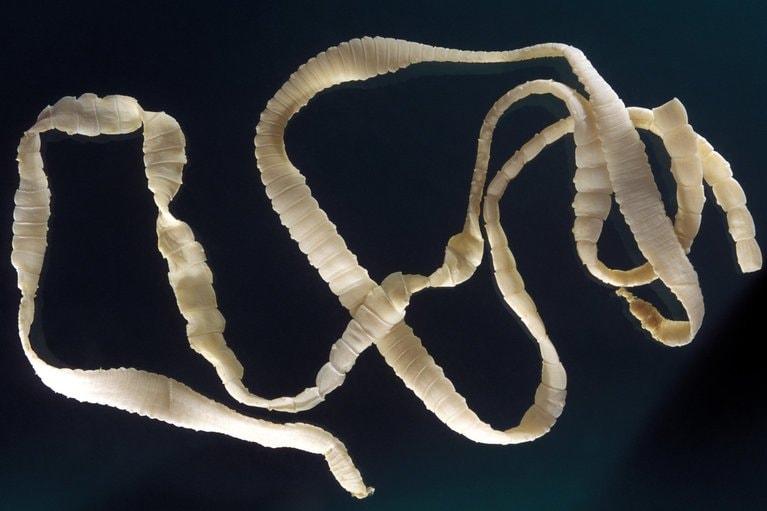
Tapeworm
Taenia spp. / Dipylidium caninum / Echinococcus spp.
Tapeworms are flat, ribbon-like segmented worms that attach to the intestinal wall using suckers and hooks. They have no digestive system and absorb nutrients directly through their skin. Adult worms shed egg-filled segments (proglottids) that look like grains of rice. Some species (Echinococcus) can form dangerous cysts in organs.

Giardia
Giardia duodenalis (syn. G. lamblia, G. intestinalis)
Giardia is a microscopic flagellated protozoan that colonizes the small intestine. It exists in two forms: the active trophozoite (pear-shaped, with two nuclei resembling a face) and the hardy cyst form that can survive in cold water for months. It is a leading cause of waterborne diarrheal illness worldwide.