
For educational purposes only. This page does not provide medical or veterinary advice, diagnosis, or treatment. Always consult a qualified healthcare or veterinary professional before making any health-related decisions.
Gnathia
Gnathia spp.
Size: Visible to naked eye — praniza larvae 1–3 mm; adults 2–5 mm
Extremely common on coral reefs worldwide; considered one of the most abundant fish parasites in reef ecosystems; a major food source for cleaner fish
Gnathia are tiny parasitic isopods (crustaceans) that are among the most prevalent blood-feeding parasites on coral reefs. Only the juvenile stage (zuphea/praniza) is parasitic — they attach to fish, feed on blood and tissue fluid, then drop off to molt and mature. Adults are free-living and do not feed. Despite their small size (1–7 mm), gnathia can cause significant blood loss, stress, and disease transmission in heavily infested fish. They are a primary food source for cleaner wrasses and cleaner shrimp, making them a key part of reef ecosystem dynamics.
Lifecycle
Adult gnathia live in reef rubble, sponges, and sediment. Females brood eggs internally. Juveniles (zuphea) emerge and actively seek fish hosts, attaching to fins, gills, and skin to feed on blood. After feeding, they drop off, return to the substrate, and molt into the next stage. They go through three feeding cycles before becoming non-feeding adults. The entire lifecycle takes several weeks.
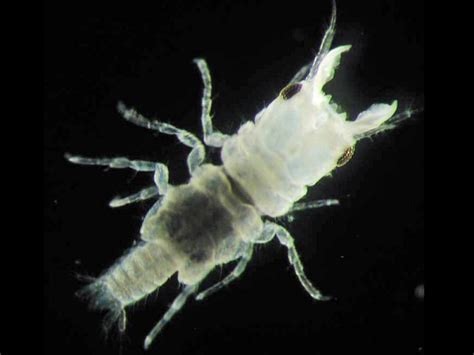
Gnathia — Gnathia spp.
Symptoms
Pharmaceutical treatments
Evidence-based medications used by healthcare and veterinary professionals.
Reference only. Medication names, types, and notes are provided for general awareness. Dosage, suitability, and prescribing decisions must be made by a licensed physician or veterinarian.
Praziquantel bath
Aquarium treatmentEffective against gnathia in aquarium settings. Used as a bath treatment or added to tank water. Safe for most fish and invertebrates at recommended doses.
Freshwater dip
Aquarium treatmentBrief immersion in freshwater (2–5 minutes) dislodges and kills gnathia on the fish's body. Provides immediate relief but does not address parasites in the substrate.
Holistic & natural approaches
Traditional, herbal, and integrative approaches for general awareness.
Not a substitute for medical treatment. Natural remedies listed here have not been evaluated by the FDA or equivalent regulatory bodies. Do not use these in place of prescribed treatment. Always consult a qualified healthcare or veterinary professional first.
Cleaner fish and shrimp (biological control)
Cleaner wrasses (Labroides dimidiatus) and cleaner shrimp (Lysmata spp.) actively hunt and eat gnathia. In reef aquariums, maintaining a healthy cleaner population is the most effective long-term control strategy — mimicking the natural reef cleaning station dynamic.
Substrate management
Gnathia hide in rubble, sand, and sponges between feeding cycles. Reducing hiding spots through substrate management and regular vacuuming can lower population levels in aquarium settings.
UV sterilization
A properly sized UV sterilizer kills free-swimming gnathia juveniles as they pass through, reducing the number that reach fish hosts. Effective as a preventive and population-control measure.
Prevention
Zoonotic risk — low or none
Gnathia do not infect humans. They are exclusively parasites of marine fish and pose no human health risk.
Related parasites
Anisakis
Anisakis simplex
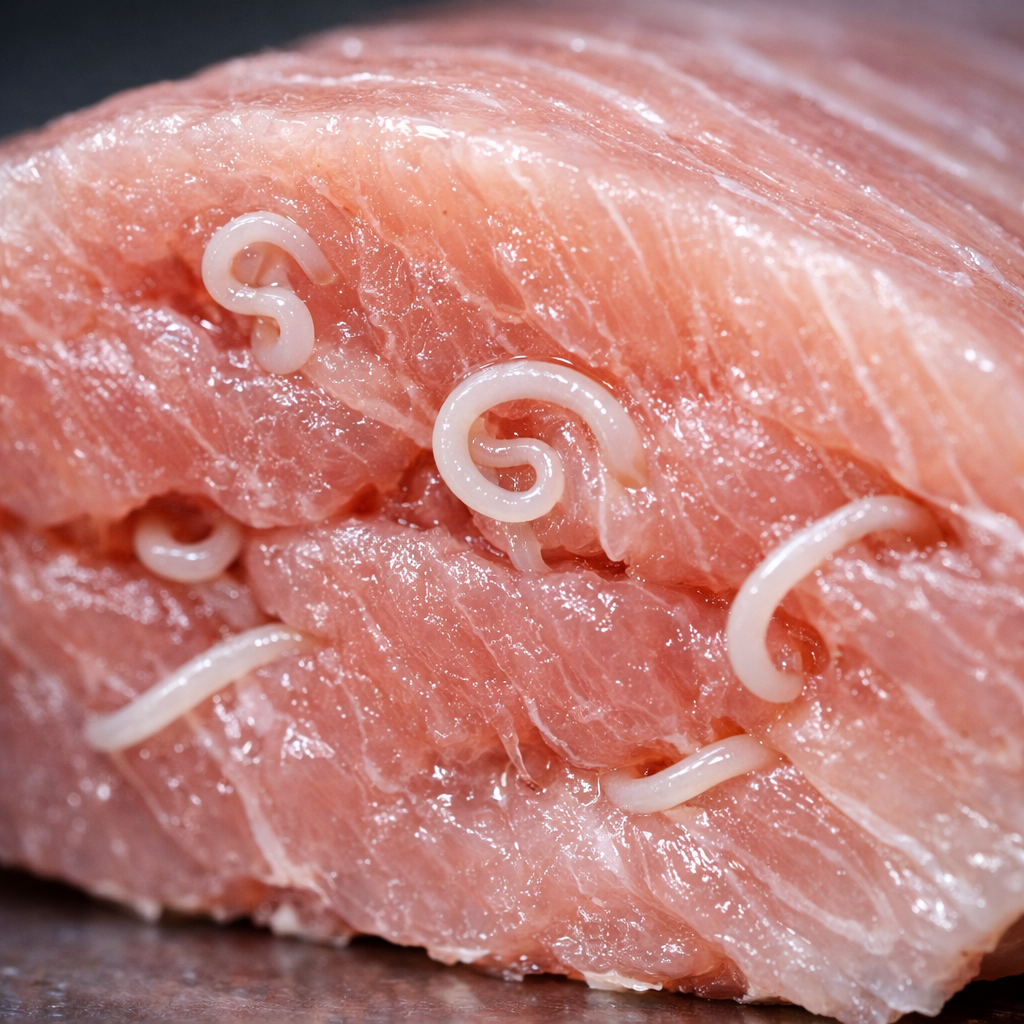
Anisakis is a parasitic nematode (roundworm) found in the flesh of many marine fish and squid. Humans become accidental hosts by eating raw or undercooked seafood — sushi, sashimi, ceviche, and lightly cured fish are common sources. The larvae cannot complete their lifecycle in humans but burrow into the stomach or intestinal wall, causing a painful condition called anisakiasis. Marine mammals such as dolphins and seals are the definitive hosts.

Tongue-Eating Louse
Cymothoa exigua
Cymothoa exigua is one of the most remarkable parasites known to science — the only parasite known to functionally replace a host organ. This marine isopod (a crustacean related to pill bugs) enters a fish through the gills as a juvenile male, attaches to the tongue, severs its blood supply, and causes the tongue to atrophy. The parasite then takes the tongue's place, functioning as a replacement tongue while feeding on the fish's blood and mucus. The fish can still eat with the parasite in place. It poses no known risk to humans.

Sea Lice
Lepeophtheirus salmonis / Caligus spp.
Sea lice are parasitic copepods (tiny crustaceans) that attach to the skin, scales, and mucus of marine fish, particularly salmon. They are one of the most economically damaging parasites in the global aquaculture industry. Sea lice feed on skin, mucus, and blood, causing lesions, stress, and secondary infections. Heavy infestations can be fatal. Salmon farms create dense fish populations that allow sea lice to multiply rapidly and spread to wild salmon populations nearby — a major environmental controversy.